Let Me Speak
How Domitila Barrios Cuenca forced the world to hear Bolivia's mining women

A girl born in poverty, who had to raise her siblings at the age of 10 after her mother died and her father traumatized by war turned to alcoholism, a girl who married a tin miner at the age of 16 and lived with him, and ultimately their seven children, in a house without a toilet or running water, surely a girl like this could never grow up to have an international profile and make major national impact, right?
Today, on her birthday, we honor Domitila Barrios Cuenca. Born in a poor village in Bolivia in 1937, she was born with absolutely nothing. She’d later say, “in the richest mines live the poorest people.” to describe where she came from. Yet the people in her community had each other, and they built everything from that. The miners organized in the Miners’ Union while Cuenca and the other wives joined the Housewives’ Committee of Siglo XX, which was an official part of the Federation of Mining Workers. The name undersold the ambition. Under Domitila’s leadership, the Committee became a genuine political force. Among its most striking actions was a 450-kilometer march from the mining districts of Siglo XX to La Paz, conducted on foot, to demand the government pay three months of unpaid wages to the miners. Her political work was important to her: “If a woman is politically aware and already has an education, she will raise her children differently from the very beginning, and those children will turn out to be something else entirely.”
On the night of 24 June 1967, which was the local celebration of San Juan, the government sent soldiers into the mining camp to break the organizers and “combat the subversive” elements. They opened fire on miners, their wives, and their children. Cuenca was eight months pregnant. She was arrested, beaten, and thrown into a cell. The abusive treatment resulted in her baby being stillborn and Cuenca suffering permanent internal injuries. She responded by speaking louder. Her testimony about the massacre became one of the most important accounts of state violence against Bolivia’s mining communities.
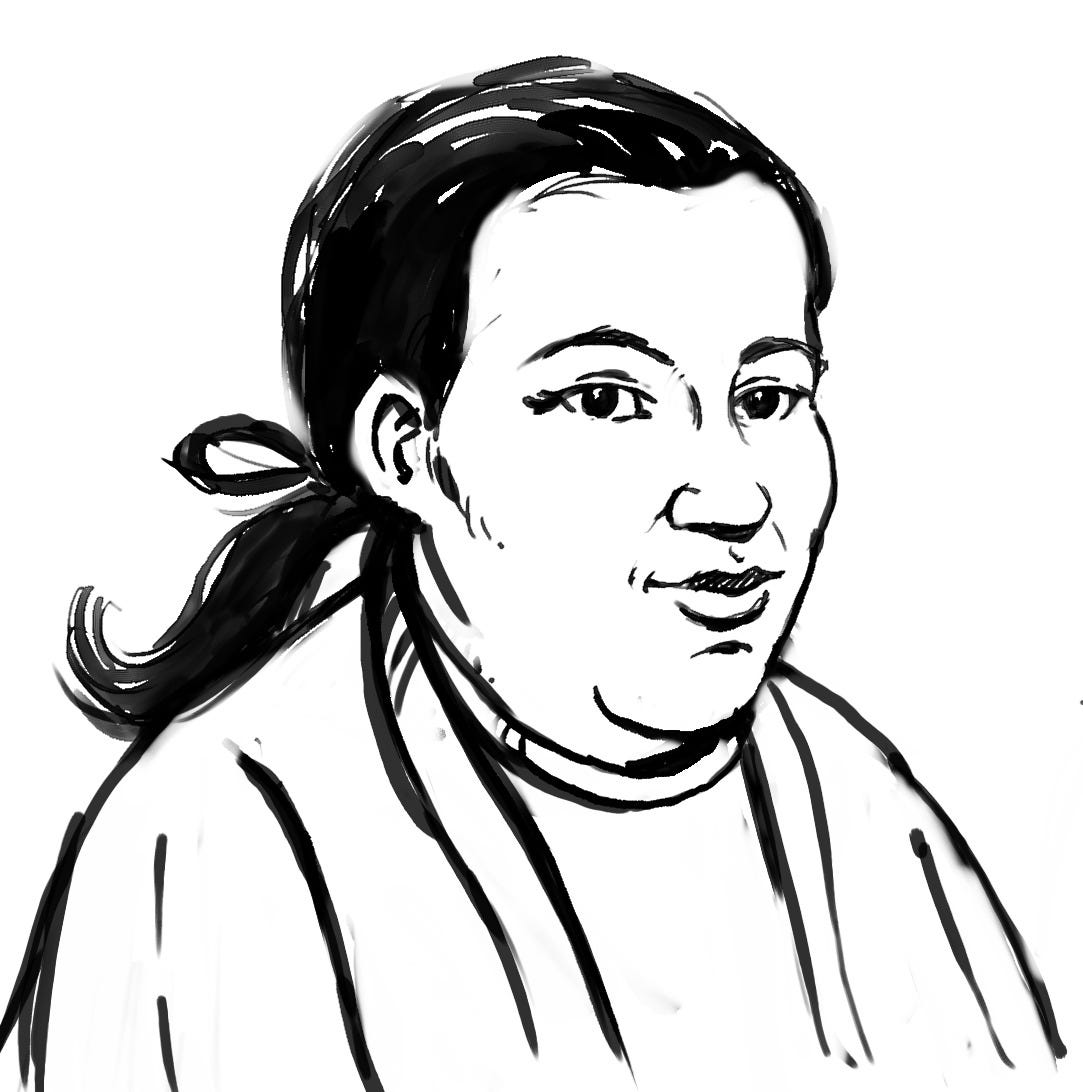

In 1975, Cuenca was invited to the very first UN Women’s Conference, being held in Mexico City. There she challenged the agenda head-on, arguing that the women who wanted to discuss prostitution, birth control, and individual rights were focusing on the concerns of the affluent while the majority of women around the world cared primarily about survival, class, and imperialism. This was one of the first (and quite forceful) articulations of intersectionality – the overlapping interaction of identities shaping one’s experience of oppression – within the global feminist movement.
Then, in December 1977, Cuenca and four other miners’ wives began a hunger strike against the Banzer dictatorship. They demanded freedom for imprisoned mineworkers, amnesty for exiled union leaders, demilitarization of the mines, and general elections. Thousands of Bolivians joined the strike, and on the 23rd day, the government conceded, and the dictatorship was ended. Cuenca used this opportunity and ran for vice president. While she wasn’t successful, she’s still credited with ending the dictatorship, “The democracy that we have been living since 1982 is thanks to Domitila,” one Bolivian senator later said.
In July 1980, while Domitila was at an international women’s conference in Copenhagen, a bloody coup took place back home. The new regime made clear she would be killed if she returned. She went into exile in Sweden before returning in 1982 when democracy was restored. After that she remained active until her death in 2012. President Evo Morales declared three days of national mourning upon her death and posthumously decorated her with the Order of the Condor of the Andes.