Modern solutions for modern problems
Celebrating the World Creativity and Innovation Day

Where would we be today if those cavemen (and women!) hadn’t come up with the brilliant idea of using stone tools to make their lives easier about 3 million years ago? We’d probably not be able to read and write a newsletter about human rights. In a world that faces slightly more complex challenges than what early humans solved with stone hammers and handcrafted spears, we need all the creativity and innovation we can get.
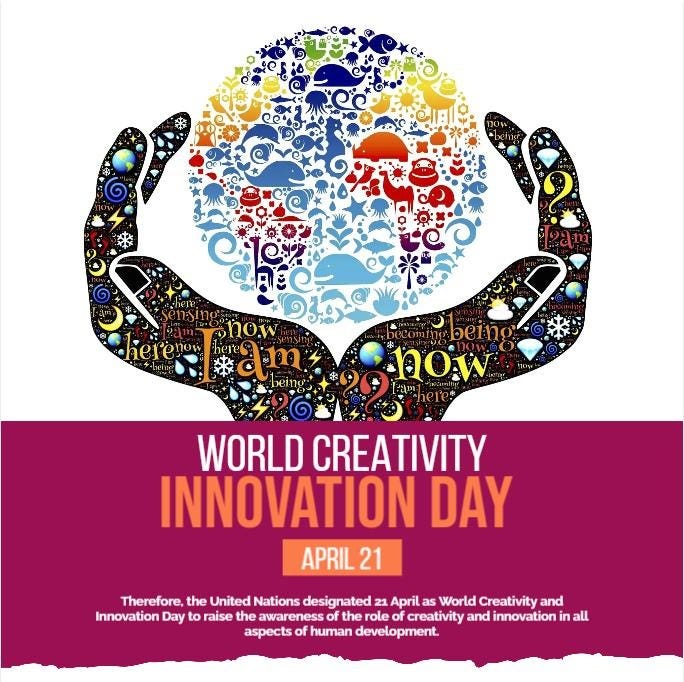
Modern problems require modern solutions, and that’s what today is about: since 2018, the United Nations celebrates the World Creativity and Innovation Day on 21 April. This day is meant to raise awareness for the important role of innovativeness and being able to turn our imagination into reality. Creativity is recognized as an important factor in societal growth, both economically and socially. In its 2005 Convention on Diversity of Cultural Expressions, the United Nations Educational Scientific and Cultural Organization (UNESCO) emphasized the importance of creativity for the development of culture. A people’s culture plays a vital role in the development of society at large as it is a source of identity for individuals and whole communities. The Convention gives governments a policy framework to support local cultural production and promote artists, media diversity, and market access. UNESCO also provides financial support through the International Fund for Cultural Diversity, especially in the Global South. Arts and other creative industries constitute high-growth areas of the world economy, offering even developing countries a new opportunity to create jobs and profit. The booming market of Hindi cinema in India, better known as “Bollywood”, generated a revenue of over $61 billion in 2024 alone. A much younger equivalent can be found in the film industry of Nigeria, which stays on trend by being called “Nollywood”. Nollywood employs over one million people in the country, making it a job-generating economic powerhouse.
Beyond their contribution to economic growth, culture and creativity also have a tremendous non-monetary value, which is why the freedom it takes for people to be creative is protected under Article 15 of the International Covenant on Economic, Social and Cultural Rights. Anyone can express themselves in creative ways, making creativity a room for inclusiveness, where everyone can contribute to cultural development and mutual understanding among individual artists and cultural communities. This is true for people of all ages but especially true for children. The Convention on the Rights of the Child in its Article 31 explicitly mentions the right of children to participate in cultural life and the arts, and sets out an obligation for States to ensure equal opportunities for children.
It is thanks to the creative and innovative ideas of brilliant minds that we continue to find new solutions to current problems. Be it the World Food Programme’s plan to end world hunger that Elon Musk once asked for ;), or smart innovations to tackle climate change. Creativity and innovation are what makes us human – it helped us get to where we are today and will help us to overcome the challenges humanity will face in the future.