Never Again, at Home
How Germany judges genocide

Decades after Raphael Lemkin coined the term genocide to describe the horrendous crimes Nazi Germany had committed, that same country put genocide at the center of a new law on international crimes.Adopted one day before the Universal Declaration of Human Rights, the Genocide 1948 Genocide Convention was, at its core, the world’s answer to the Holocaust. It was the codification of “Never again.” 54 years later, on 30 June 2002, the German Code of Crimes against International Law came into force. It made genocide, alongside crimes against humanity and war crimes, punishable in German courts. Interestingly, this law was created after Germany had convicted someone on the account of genocide, which had previously been prohibited under the normal criminal code.
In 1997, a German court sentenced the Bosnian Serb Nikola Jorgić to life imprisonment for his involvement in the Bosnian genocide, applying universal jurisdiction. This concept allows States to prosecute individuals for crimes they didn’t commit in the territory of that State and without being a national. Jorgić appealed to the Federal Court of Justice, and his case later went all the way up to the European Court of Human Rights, where he claimed that Germany had no jurisdiction over the actions he committed in a different country. This whole debate gave Germany the opportunity to decide on how it wanted to deal with questions of international criminal law and eventually led to the adoption of the new criminal code dedicated exclusively to international crimes.
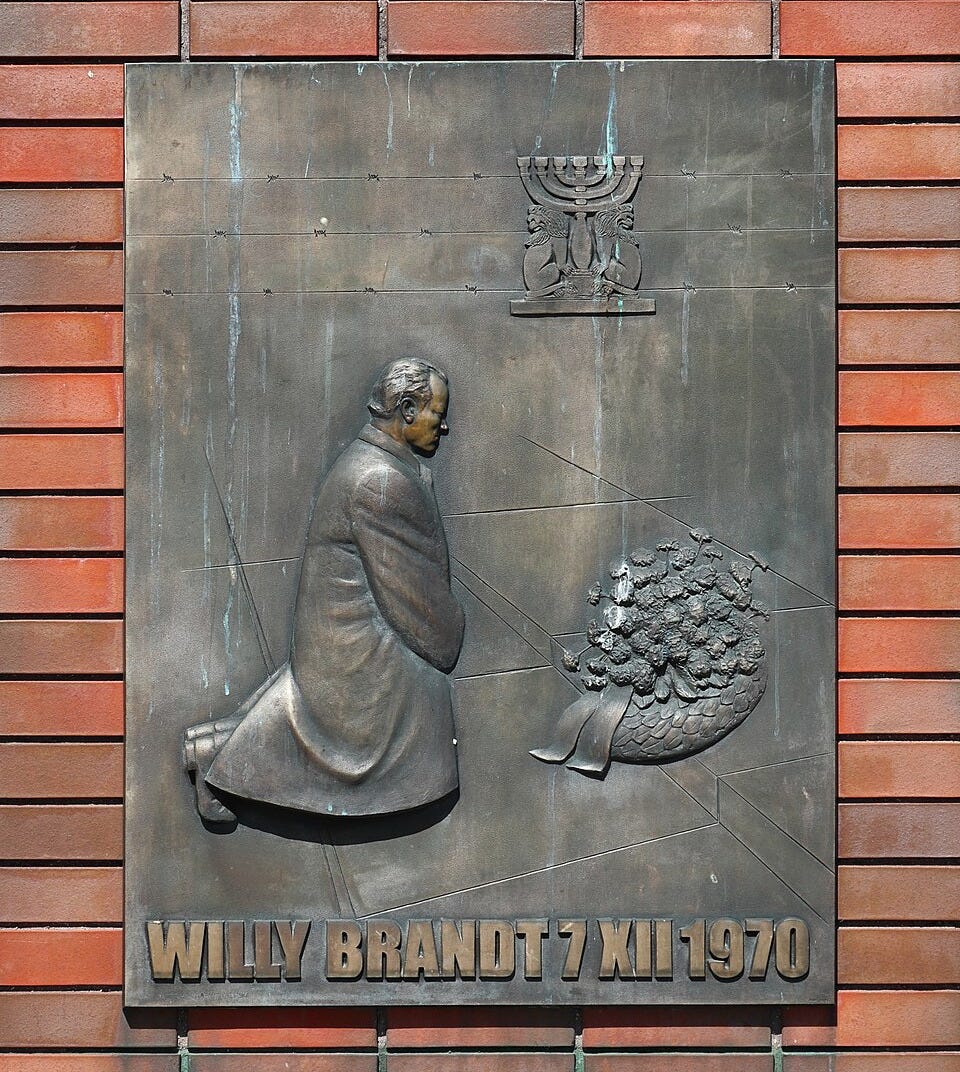
Germany made the deliberate, institutional choice to keep its worst history visible rather than buried. This Erinnerungskultur (“culture of remembrance”) includes holocaust memorials across the country, mandatory holocaust education, and national remembrance days. It hasn’t always been like this. After World War II, much of Germany was in pieces, and under the influence of the allied forces, this dark side of German history was a largely avoided topic. It wasn’t until the West German chancellor Willy Brandt’s spontaneous gesture of kneeling before a memorial to the Warsaw Ghetto Uprising in 1970 that this culture was established. Today, the concept of collective responsibility, rather than collective guilt, dominates the discussion of the period. No German alive today is guilty of crimes they didn’t commit, but the society accepted responsibility for keeping their memory alive. It created a complicated relationship with national pride and a past that can’t be undone, which made many Germans wonder how to “move on” without forgetting.

Germany took the crime that was named for its own darkest chapter and made sure other people would be held accountable for similar crimes. The country turned “Never again” from a slogan into a verdict.