Speak Up!
Appreciating your – and everyone else’s – mother tongue

¡Hola! Habari! Hallo! Բարև ձեզ! مرحبًا! The world is full of languages, and the world celebrates this with International Mother Language Day. (Technically the day was on Saturday, but we’ll celebrate it today. We won’t tell anyone if you don’t.)
International Mother Language Day was made to promote linguistic and cultural diversity and multilingualism. UNESCO proclaimed the day in 1999, and the UN now marks it as an annual observance.
Being allowed to speak your own language is a basic human right, and it’s recognized as such. Article 27 of the International Covenant on Civil and Political Rights states that “minorit[y groups] shall not be denied the right … to enjoy their own culture, to profess and practise their own religion, or to use their own language”.
Why does this matter? Because denying a community’s language is rarely just about words. It can mean exclusion from public life and discrimination in everyday essentials. Children learn less when they’re forced to start school in a language they don’t understand, or they’re forced out of school entirely. Likewise, if key information, e.g. health information, legal rights, voting procedures, is only available in a dominant language, whole communities are locked out of decisions that shape their lives.
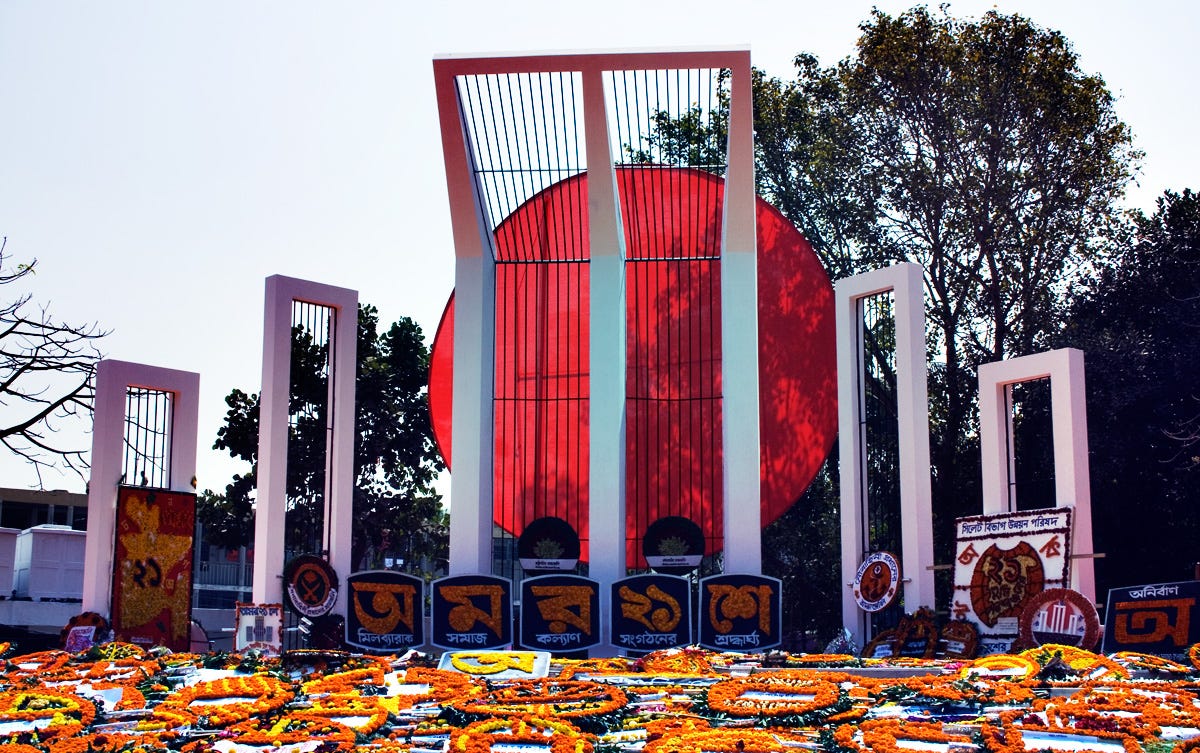
The reason 21 February was selected is to commemorate the 1952 Bengali Language Movement, when students in Dhaka (then East Pakistan, now Bangladesh) protested for the right to use Bengali as an official language on 21 February. The police used force to break the protest, with some demonstrators being killed by police. In response, 30,000 people came out the next day despite the prohibition on public gatherings. This led to a political movement that saw a change in government finally allow the use of Bengali in 1954.

We still see the oppression of minorities through the banning of their language today. In the Xinjiang region of China, the predominantly Muslim group of Uyghurs faces harsh discrimination by the government. Under the umbrella of fighting terrorism, over a million Uyghurs have been detained in so-called re-education camps in which many have been tortured. Some reported later that they were only allowed to speak with each other in Mandarin Chinese, which many don’t speak or understand. And even in everyday life, the Chinese government reportedly tries to eradicate the culture of this ethnic minority, for example by making the use of Mandarin mandatory in schools.
Multilingualism is sometimes treated as a “nice cultural extra.” International Mother Language Day insists it’s more than that: language is a gateway to belonging. We can celebrate diversity in speeches, but real respect shows up when people can participate in society in their own language.