Two Steps Forward, One Step Back
The fragility of the first abolition of slavery

It’s easy to look at landmark moments in history and view events as predictable and obvious. This hindsight bias afflicts many people when they begin learning about human rights; we’ve progressed so far as a species, it must have been bound to happen, right?
The beginning of the abolition of slavery is a great example of how that’s just not true. Today, 4 February in 1794, France became the first European colonial power to abolish slavery in its colonies. Denmark-Norway had banned the slave trade two years earlier, but that ban did nothing to free current slaves nor did it take full effect until 1803.
What made this action radical is that the National Convention didn’t simply end slavery but granted citizenship and rights to former slaves. The decree stated that “all men, without distinction of color, residing in the colonies are French citizens and will enjoy all the rights assured by the constitution.” That sentence is the sound of an empire (as we’ll see, temporarily) trying to live up to the universal language of the French Revolution.
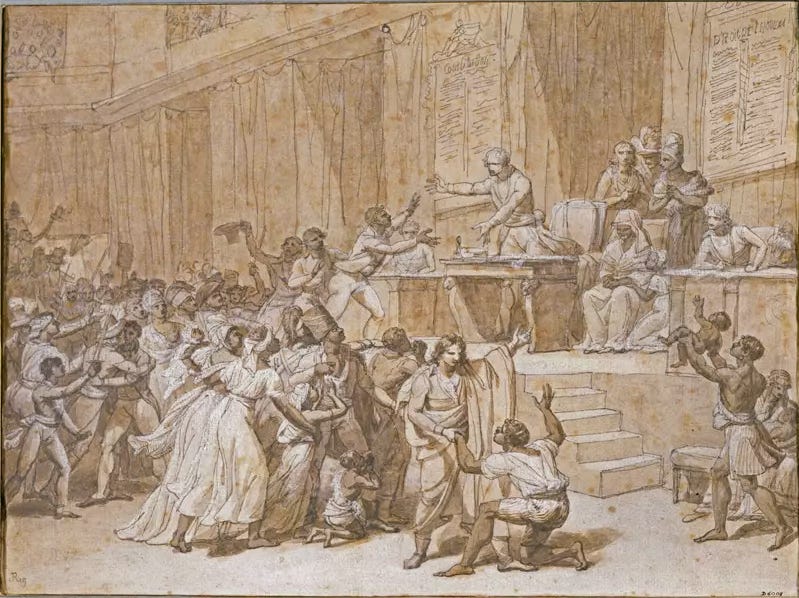
This realization of rights wasn’t done just for moral reasons: the National Convention was pushed to act by the 1791 slave rebellion in Saint-Domingue, modern-day Haiti. This slave rebellion made France lose control of its colony. To shore up support for France with the rebelling slaves, and to ensure Britain or Spain couldn’t claim the colony, the decree to end slavery ensured the local population would stay aligned with Paris. The plan was briefly successful until Haiti declared independence in 1804.
The dramatic expansion of rights from this decree didn’t last, unfortunately. In 1802, Napoleon Bonaparte reinstated slavery in the French colonial empire, reversing the promise of 1794 and demonstrating how quickly rights can be treated as a policy choice rather than a moral boundary.
If there’s a lesson here, it’s an uncomfortable one: the realization of rights often moves two steps forward and one step back before it becomes established. A bold declaration can be real – and reversible. This means our job isn’t only to celebrate moments like 1794 but to understand what made them possible, what made them fragile, and what it takes to make freedom harder to undo.